Chamber
Not For Sale
The Kenya
Trade
Investment
Hospitality
Manufacturing
Logistics
October - December 2024 Edition 19
A Publication of The Kenya National Chambers of Commerce and Industry, Mombasa County
www.kenyachamber.co.ke
Unlocking The Coastal Economy:
Dongo Kundu and it's Rewards.
The Kenya Chamber | 2
Contents
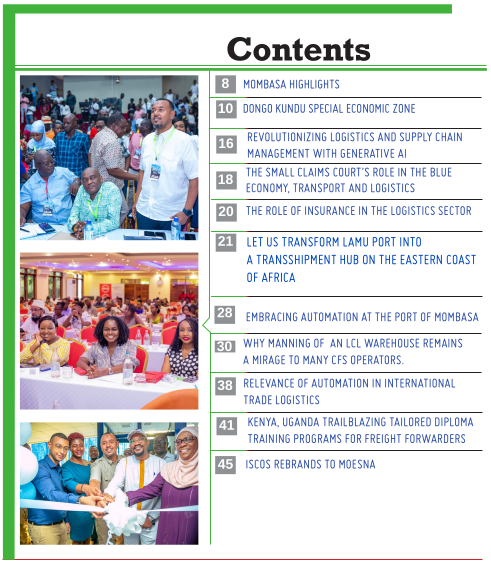
MOMBASA HIGHLIGHTS
DONGO KUNDU SPECIAL ECONOMIC ZONE
The Kenya Chamber | 4
The Kenya Chamber | 5
Chairman
Yashpal sihag
Abud Jamal said
Director
Director
vice chair
Elizabeth Mvoi
Jacqueline Waihenya
Union C&F ltd
Go blue project
E.M. MVOI &CO Advocates
JWM LAW LLP
Director
Director
Director
Director
Director
Director
Director
Director
Peter Gitata
Waqas Ahmed
Mohammed Merali
Anwar Pandya
Monsoor Mohamed
Dr. Tayba Hatimy
Wanjiku Wambugu
Mwinyi Jahazi
Baus Taka
Khushi motors
LECOL
Nyali capital Ltd
Remington Limited
Ruman group of companies
Sea port Operations
APT Commodities Ltd
Hasnain Meghaji
CUVVA Insurance Agency Ltd
Director
Fatmas Hussein
Kilua Beach Resort
Director
The KNCCI Mombasa
Board of Directors
The kenya Chamber | 6
The kenya chamber | 7
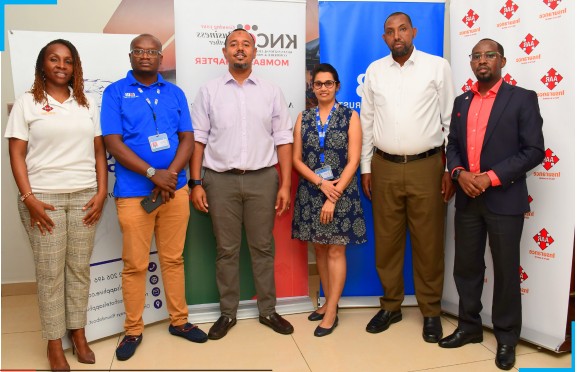
We successfully hosted the Chairman’s Breakfast Meeting focusing on “Empowering Partnerships - Building a Stronger Business Community.” Key stakeholders in attendance included: Amb. Paul Mukumbya Consulate General of the Republic of Uganda, Hon. Mohamed Osman CECM Dept. of Tourism, Culture & Trade Mombasa County, KNCCI Mombasa Board of Directors and KNCCI members among others. Special thanks to our partners: Commercial International Bank and AAR Insurance for their continuous support. Together we are fostering meaningful connections to drive growth in the Mombasa business community.es.
Chairmans Breakfast
| MOMBASA HIGHLIGHTS
The kenya chambers | 8
KNCCI Mombasa in collaboration with CIPE successfully hosted the SME Finance and Business Ethics Training. Together we are building stronger and responsible SMEs for the future.
KNCCI Mombasa Chapter had a fruitful engagement with ABSA Bank under the theme “WEZESHA BIASHARA.” This collaborative effort aimed at empowering local businesses with tools, resources, and financial support they need to thrive and grow.
Dongo Kundu Special Economic Zone:
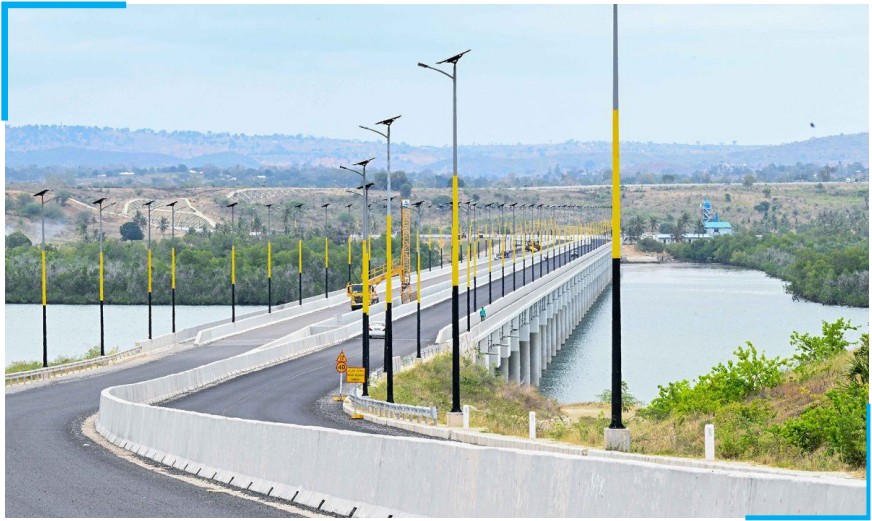
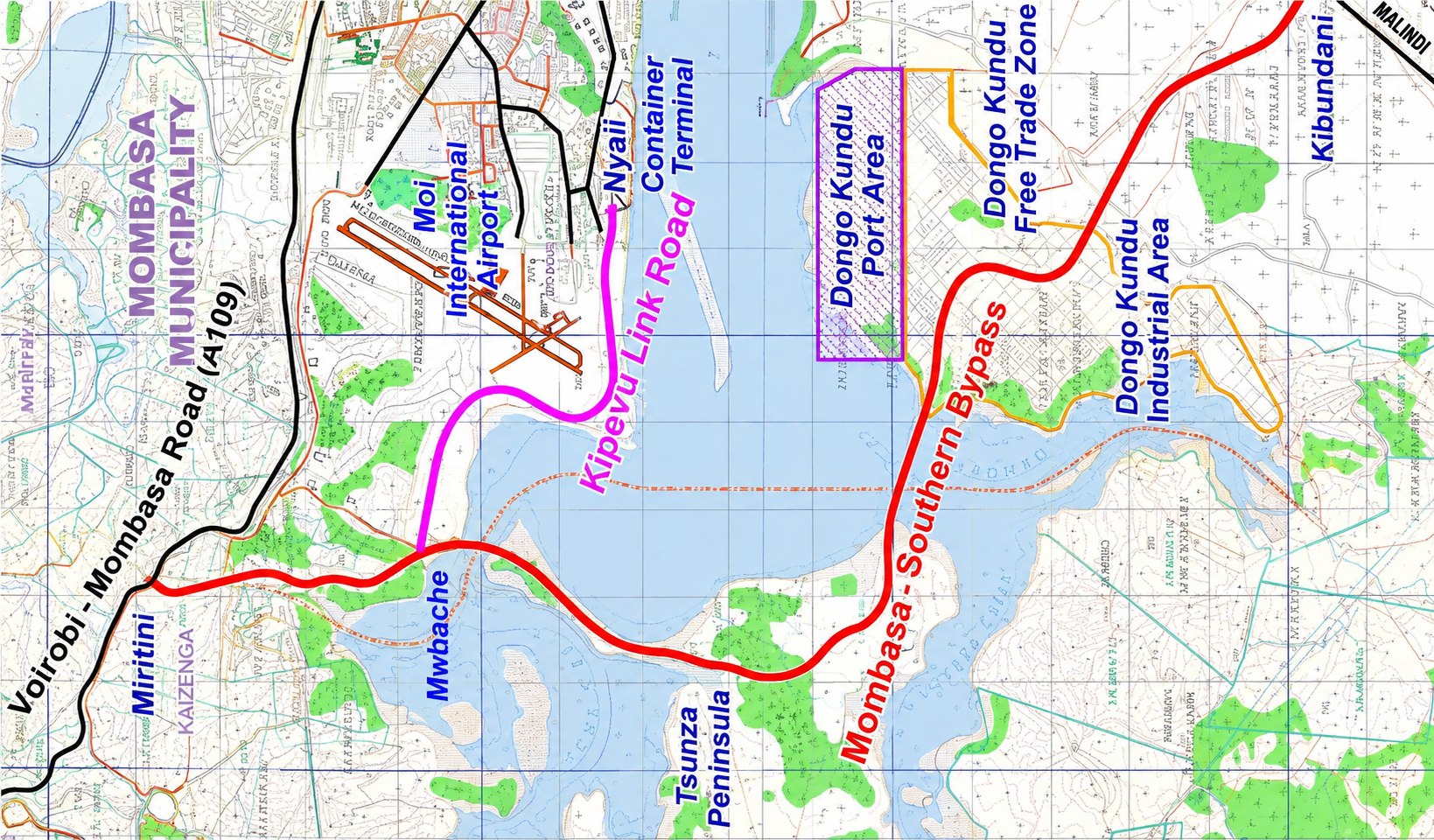
A section of Dongo Kundu Bypass road that was recently completed and launched
A Turning Point for Revamping Kenya’s Economy
Special Economic Zones (SEZs) are designated areas within a country with different economic regulations
favouring investors operating in the designated area compared to the rest. The zone often aims to attract
foreign investment with tax incentives and reduced tariffs.
Duty-free zones (DFZ) in Kenya are not just geographic areas where goods can be stored, handled, and processed without customs duties, taxes, or operating under specific regulations. They are unique in their potential to significantly boost international trade and attract foreign investment, which is crucial for the country’s economic growth. The distinct advantage of these zones and their exemption from taxes creates an environment where businesses can thrive efficiently and cost-effectively. This unique feature can pave the way for a substantial increase in international trade and significantly enhance the country’s GDP. It makes it a compelling investment opportunity for policymakers and investors, highlighting Kenya’s unique advantages of duty-free zones.
The Kenya chamber | 10
By: -Mansoor Ahmed Mohamed
Among the countries where duty-free zones or ports exist is the United States, which has several ports, including the U.S. Virgin Islands and Puerto Rico. Singapore is also known for having such a facility. The United Arab Emirates has several free trade zones. Various free trade zones exist in China, particularly in Shenzhen and Shanghai. In the Asia continent, India and Malaysia have many special economic zones that offer duty-free service. These zones are part of a vast global network that promotes trade and investment by eliminating tariffs, reducing trade barriers, connecting economies, and fostering international cooperation. Kenya’s continuous involvement in this network will foster a sense of connection and collaboration among global economic partners in enhancing its economic growth potential. The financial benefits of duty-free zones are not just significant. They are potentially transformative, offering a reassuring potential return on investment. These zones promote international trade, improve logistical efficiency, and offer substantial cost-saving services. The exemption from customs duties, taxes, and specific regulations allows companies operating within the zones to reduce production costs, making their products more competitive in the global market. This unique advantage of duty-free zones is a major attraction for foreign investment and encourages businesses to operate within these zones, paving the way for substantial economic growth. This potential underscores the urgency and importance of policymakers and investors in leveraging these zones for Kenya’s economic development.
Kenya has several duty-free zones, each with its unique structure and purpose. The most common are Export processing zones (EPZs), which promote export-oriented manufacturing by allowing the duty-free import of raw materials for manufacturing products destined for the export market. Other include Special Economic Zones (SEZs), Duty-Free Shops, Free Ports, Free Trade Zones (FTZs), and Bonded Warehouses, each serving specific economic goals and operating under different regulations. This comprehensive understanding of the types of dutyfree zones in Kenya is crucial for policymakers, business leaders, and economic development stakeholders, providing them with the necessary information to make informed decisions about their potential expansion. Other types are.
This knowledge of their unique advantage enhances the audience’s understanding of the diverse types of duty-free zones. 3. Free Ports allow goods to be unloaded, stored and reloaded for export without customs duties being applied. 4. Free Trade Zones (FTZs): Areas where goods can be imported, stored, and exported without paying customs duties. They often focus on manufacturing and logistics. 5. Bonded Warehouses: These are facilities where a wide range of goods, from electronics to perishable goods, can be stored without paying duties until they are moved to the domestic market. Goods in these warehouses can be manipulated or repackaged without incurring obligations, providing a flexible storage solution for businesses. For instance, electronics, textiles, and even perishable goods like fruits and vegetables can be stored in these warehouses.
1. Special Economic Zones (SEZs): These are designated areas within a country with different economic regulations favouring investors operating in the designated area compared to the rest. The zone often aims to attract foreign investment with tax incentives and reduced tariffs. 2. Duty-Free Shops are unique retail outlets often found at international seaports and airports. They offer a distinct advantage to travellers and seafarers, allowing them to purchase goods without paying local taxes and duties.
The EPZ Act cap 517 of the law of Kenya, enacted in 1990, is a crucial piece of legislation that paved the way for establishing The Export Processing Zones Authority Kenya (EPZA) as a state corporation under the Ministry of Investments, Trade & Industry. The Act’s main objective is to regulate and administer the approval of activities within the export processing zones. EPZA plays a significant role in providing a robust regulatory framework for businesses, ensuring a conducive environment for export-oriented production. The Act also emphasises the development of the smooth running of systems within Export Processing Zones (EPZ), with particular emphasis on providing advice on removing impediments to and creating incentives for export-oriented production in areas designated as export processing zones. Another significant role of the Act is to protect government revenues and foreign currency earnings. The Authority has licensed about thirty-two Companies (32) to operate in Kenya in the garment industry. Six companies are certified as animal processing plants. These companies export goods to various global markets, with the following destinations being the most prominent.
Export Processing Zones Authority Kenya
Under the African Growth and Opportunity Act (AGOA), the United States is one of the most prominent destinations for Kenyan exports from the EPZs. This U.S. trade law enacted in 2000 aims to promote economic development and foster more substantial trade and investment ties between the United States and eligible Sub-Saharan African countries. It allows access to certain goods, especially textiles and apparel, for exemption of taxes and duty. The European Union countries are another destination for EPZ companies to export horticultural products, tea, and processed foods. The companies benefit from signed preferential trade agreements. Other


The kenya chamber | 11
companies focus on animal and plant-based exports. These are typically value-added products derived from Kenya’s affluent agricultural and livestock sectors. Some examples of animal and plant-based goods exported by EPZ companies include: • Processed Animal Products • Seafood, Fresh and frozen fish, mainly Nile perch and tilapia. • Horticultural Products • Processed Foods • Tea and Coffee • Herbs and Spices Available statistics show that EPZs in Kenya have been a resounding success, generating billions of Kenyan shillings in export revenue, approximately USD 700 million annually in export earnings. Most of this income comes from the textile and apparel sector, significantly benefiting from access to U.S. markets under AGOA. This success story not only underscores the potential and promise of duty-free zones in Kenya but also instils a sense of optimism and confidence in their economic impact, providing a compelling case for their expansion. For instance, in 2020, EPZs in Kenya contributed ample to its GDP, demonstrating their significant economic role.

Free Port.
Kenya’s Vision 2030 agenda is to create a globally competitive and prosperous country with a high quality of life by 2030. This transformation is expected to propel the Nation into a new industrialising middle-income country that provides its citizens with a high quality of life in a clean and secure environment under three critical pillars of Economic, Social, and Political governance. The only way to accomplish this goal is to set up investments to generate foreign currency and create more jobs for our citizens. With the country’s current instability, inflation, and currency fluctuation, a Free Trade Zone is the only investment to stabilise the nation. Due to their special customs regimes, free ports offer economic advantages for global trade in manufacturing, assembly, goods handling, Value Addition, and logistics.
These ports are defined as a specified area based upon the unrestricted international exchange of goods, with customs tariffs used only as a source of revenue and not as an impediment to trade development. Free ports are thus onshore enclaves treated as customsfree zones - or technically as foreign territory for tax purposes. They are designed to attract overseas traders and manufacturers to set up businesses. Duty is payable only when goods are converted to local use or moved into the host country market. Goods imported abroad to the facility are not subjected to domestic tariffs and
regulations until they leave the free port. Goods can be shipped from the free port without paying the customs dues if their destination is another foreign country. If the imported goods leave the free port for a destination in the same country, tax is levied on leaving the free port as if the goods had just arrived there. The free port concept focuses on attracting investment to stimulate the domestic economy. It intends to attract foreign goods to its receiving centres, at which inspection, packaging, sorting, labelling, and reshipment can occur and add value to the goods. This concept has existed for about 100 years, since its inception in Hamburg, and has attracted many benefits.
The concept is more prevalent in the US, the Middle East, and Europe. Some of these ports exist in Stockholm and Copenhagen. Hamburg was one of Europe’s most successful free ports till 2013. A particular advantage of the free port of Hamburg was, although within the EEC customs area, it was not to the German customs territory. Another notable European free port where car manufacturing occurs is the Trieste Free Port in Italy. Trieste is a strategically located port in the northern Adriatic Sea. It offers free port status, and goods can be brought in, processed, manufactured, and re-exported without incurring customs duties. Other ports with free trade zones in Europe that support some levels of automotive-related activities are the Port of Barcelona in Spain.
Here are some other free ports across the globe that function as special economic zones
• The Free Port of Copenhagen (Denmark) offers a free port area with customs benefits for warehousing, transhipment, and light manufacturing. It plays a significant role in Northern European trade.
• Freeport of Madeira (Portugal), in the Atlantic Ocean, has a free trade zone called the Madeira International Business Centre. It offers tax advantages and customs exemptions, making it a hub for international business and light manufacturing.
• Shannon Free Zone (Ireland) is one of the oldest free trade zones in the world, located near Shannon Airport, Ireland. Although it is not a port in the traditional sense, it is a significant free trade area offering incentives for manufacturing, technology, and logistics.
• Gibraltar Free Port offers customs and tax benefits to maritime trade and logistics companies. It is strategically located at the entrance to the Mediterranean and is used for various commercial and shipping activities
• Port of Piraeus (Greece) Piraeus has free trade zones within its port area. It is a central Mediterranean shipping hub with particular logistics, warehousing, and industrial processing provisions.
• Port of Le Havre (France) offers free trade zone-
The kenya chamber | 12
Establishing Dongo Kundu as a special economic zone can be a game changer in boosting our country’s economy. At the moment, plans are in the advanced implementation stage. The setup of the special economic zone is a crucial infrastructure and economic development project in Kenya aimed at transforming our county into a regional industrial hub if it is focused professionally by those in authority. As a country, let us focus on the concept’s big picture and prioritise allocating space at Dongo Kundu SEZ to the proper logistics, manufacturing, packaging, and Agro-processing investors to turn our economy around. The Identified project’s strategic location is perfect. How it will be implemented is crucial to our country’s industrialisation efforts if not implemented correctly. Let us not turn it into another white elephant project where land is allocated to speculators and nothing tangible is achieved.
like benefits for warehousing and industrial processing. It’s a key gateway for international trade and has significant connections to various industries, including automotive.
An excellent example of the Dongo Kundu project could be the Dubai free port at Jebel Ali Free Zone (JAFZA), which plays a pivotal role in the packaging and manufacturing industries due to its strategic location and favourable economic conditions and infrastructure. JAFZA has several benefits, which could be our turning point if we replicate their concept and management system in our country. Kenya can introduce the following incentives to investors to kick start the process after allocating space to the prospective right investors.
that 80% of the staff employed are local citizens. This will create job opportunities for our people.
Several sea and inland waterway ports in Belgium are exempt under Belgian law from the general corporate income tax regime. The port is subjected to a different tax regime, with a different taxable base, resulting in a lower taxation level for investors in the free port than for other companies in Belgium.
• We can start by tailoring supportive regulations and streamline the issue of licensing by introducing a simple and easy way to do business registrations and ownership. These will simplify registration and business setup processes for investors. For example, develop a policy that allows 100% foreign ownership of company shares without partnering with a local shareholder if an investor is not interested or comfortable in a local investor’s partnership, provided
The Kenya chamber | 13
• Policies and cargo movement should also be simplified. Simplified customs processes, encompassing electronic documentation and reducing bureaucratic hurdles, will make it easier for manufacturers to do business in the free port.
• The Introduction of Duty-Free Imports and Exports within the Free Zone will enable Companies operating in the new zones to benefit from the financial incentive. This will motivate investors and help the packaging and manufacturing industries, which often rely on importing raw materials and exporting finished products.
• To motivate more investors to come and invest in the country, Kenya should Introduce other Tax Exemptions. The free port facility policies could offer a 60% corporate tax exemption for up to 25 years, an 80% personal income tax exemption, and even come with no currency repatriation restrictions, just the way free ports in European countries operate. These tax incentives will help companies reduce operational costs within the zone.
• Mombasa is strategically located between North Africa, the East African hinterland, the Middle East, Europe, Asia, and southern Africa, allowing investors to import and export raw materials and finished products worldwide easily. Businesses in the free port will benefit from all modes available through sea, air, or road transport. As it is right now, all major shipping lanes access the port due to its quick vessel turnaround, making it one of the most efficient regional ports that enhances the total supply chain and distribution networks
• The setup of Modern Facilities: The government can adjust a few
Dongo Kundu Project
The Kenya Chamber | 14
things at the port and provide state-of-the-art industrial infrastructure, including warehouses, factories, and logistics facilities. These will enable packaging and manufacturing companies to benefit from ready-to-use spaces that could be easily customised to suit specific production needs.
• Innovation and Technology: Encouragement of research and development is vital for a country’s economic growth and emerging technological changes. The government should encourage innovation and technology development in its free zones by setting goals for its Industrial Strategic plan to enhance its position as a global hub for all industries. This includes using advanced robotic systems, automation, and Smart Manufacturing. This will boost efficiency in production processes and packaging lines. A good example is in countries like Singapore and Shenzhen in China.
Introducing these incentives will make it easy to access Regional Markets. The new project could be a global hub and provide easy access to the fast-growing markets of East Africa, the Middle East, the rest of Africa, and beyond. Those who invest in the port could cater to diverse sectors, from retail to heavy industries, by utilising the logistical
advantages of the facility as a regional hub. The port can also act as a re-export hub, making it ideal for companies that want to package and assemble goods in Mombasa and then distribute them to regional and international markets. Industries such as the automotive assembly can set up companies and use the free port to assemble and package parts before distributing them across the region. The same applies to food packaging and pharmaceutical products companies, which can leverage Dongo Kundu free port to manufacture and package products to distribute across East Africa, Europe, and beyond.
conclusion
Suppose our regulations on the Free port policy provide a conducive environment for investors, with a combined commitment to sustainability and innovations. In that case, Dongo Kundu can be a top global business in the free port zones. It will offer numerous advantages in various sectors, from shipping and logistics, packaging, and manufacturing to innovations of new products. Products from the facility can access world-class infrastructures and strategic markets at a low cost, thanks to savings on duties and taxes. Yet, more jobs would be created, and gross domestic product (GDP) would increase..
The Kenya chamber | 15
Revolutionizing Logistics and Supply Chain
Management with Generative AI
GenAI is revolutionizing logistics, reshaping supply chain management, and setting new standards of
efficiency, but its journey is full of challenges and ethical considerations.”
In today’s world of realtime and efficiency demands, the logistics and supply chain sectors are undergoing a trans formative shift, marked by the revolutionary advent of Artificial Intelligence (AI), and particularly in its generative form (GenAI). This remarkable moment in technological evolution is not just a milestone but a catalyst for a profound transformation of how we approach logistics and
Insights by: : ~Naimah Jaradi Marketing Executive KNCCI Mombasa Chapter
The launch of ChatGPT on the 30th of November 2022 symbolized a significant leap towards reimagining operational frameworks. This tool, emblematic of Gen-AI’s potential, offers unparalleled efficiency and innovation, reshaping how businesses meet customer demands and setting a new standard for the industry.
supply chain management.
According to Gartner, AI – specifically GenAI – is reshaping the dynamics of the human-machine relationship. Machines are evolving to become more than just tools, undertaking complex tasks. Gartner predicts that “GenAI will be a workforce partner for 90% of companies worldwide by 2025.”
Yet, embracing AI requires a nuanced approach. Organizations, especially those outside the tech sphere,
must judiciously allocate resources to harness AI’s potential without overextension. Gartner distinguishes between “Everyday AI,” enhancing productivity with readily available tools, and “Game-changing AI,” which necessitates significant investment and patience but promises revolutionary innovation.
The spotlight on GenAI in 2023, catalyzed by forums like the Gartner Symposium, underpins its role in personal and professional enhancement, operational optimization, and the redefinition of workforce dynamics. Particularly in logistics, Gen-AI’s influence extends from augmenting decision-making with synthesized data to re-imagining legacy system modernization and fostering machine-centric customer engagement.
• GenAI makes people better and more powerful personally and professionally: GenAI tools can significantly enhance training programs within logistics and supply chain management. For instance, creating interactive training modules or simulations for logistics operations, using GenAI to customize learning experiences based on individual learner needs, skills, and progress. This approach not only improves employee productivity but also accommodates a diverse workforce, including neurodiversity and senior workers, by providing tailored learning experiences that maximize their contributions to logistics operations.
Key insights include:
The Kenya Chamber | 16
The Kenya Chamber | 17
The Small Claims Court’s Role In The Blue
Courtesy call by KNCCI Directors with the SCC Adjudicators at Mombasa Law Courts (20th June 2024)
Economy, Transport And Logistics
The Small Claims Court(SCC) was established to promote the ease of doing business in Kenya, by creating an enabling environment for Small and Medium Enterprises(SMEs) to thrive. The SCC is an actualization of the Chief Justice of Kenya’s vision of Social Access through Access to Justice (STAJ), one of whose goals is to establish a multi-door approach to dispute resolution. This means that many avenues are available to parties who are in conflict, one of which is the SCC. The goal of the Court is to promote a people-centered justice, especially for the social and economically disadvantaged. Access to justice is however promoted, regardless of social and economic class; even for the larger enterprises and the socially and economically empowered citizens
The Blue Economy features businesses including clearing and forwarding, hotel and catering, port operations, supplies, transport to mention a few. As these business interact with each other and with regulatory authorities of government, there often arises conflict which requires efficient and quick resolution. Without such efficient resolution of conflicts, healthy business relationships break down. This results in losses which affect the flow of money and eventually slow down the country’s overall economy.
The SCC’s guiding principles are: 1.Timely disposal of cases using the least expensive method, 2.Promoting equal opportunity for all to access justice, 3.Fairness of process and, 4.Simplicity of procedure.
The period before the SCCs were established saw money held up in disputes in courts for years as cases were often complex and expensive. The SCCs have reduced the turn around time for dispute resolution with quick resolution of disputes whose value does not exceed Kes.1,000,000/- (approx. USD 7,707) in a simple and cost effective way.
Quick resolution-The Small Claims Court Act requires that all cases filed at the SCC should be decided within 60 days from the date of filing. Once the hearing of a case concludes, the SCC should make a decision within 3 days. Adjournments are prohibited, except in exceptional circumstances, where they are limited to a maximum of three.
Simple Procedure- Standard forms are available on the judiciary website and the SCC registry that the
The Kenya Chamber | 18
The Kenya Chamber | 19
Claimant, Respondent or Third Party only needs to fill with necessary modifications. Filing of cases is done online on the judiciary e-filing system https://efiling.court. go.ke/ A person may represent themselves or hire an advocate. In the case of companies, the representative files an Authority to Sue, signed by the company directors. Once the case is heard and judgment delivered, the Court issues a decree which is executed against the debtor, with the help of an auctioneer.
Cost-effectiveness- Filing a case at the SCC costs as follows: Kes 200/- for claims less than 50,000/-; Kes 400/- for claims worth Kes 50,000-Kshs 100,000/-; Kes 600 for claims worth Kes 100,000/- to Kes 150,000/- and Kshs 1,000/- for claims worth Kes 150,000 to Kes 1,000,000/-. These costs are lower than those payable in the Magistrates Courts.
The Court promotes alternative dispute resolution mechanisms (ADR), Alternative Justice Systems (AJS), Court Annexed Mediation (CAM) and other non adversarial methods of resolving disputes
The Small Claims Court, Mombasa opened its doors on 8th June 2022. Since then, 3,770 cases have been resolved out of the 3,907 filed and the total value of the judgments awarded is Kes. 603,992,009/- (as at 31st July 2024). The SCC Mombasa has jurisdiction over cases originating from Mombasa County. At the Coast, SCCs
have been launched in Malindi, Lamu, Taita Taveta and Voi. Litigants in areas where the Court have not been operationalized should file their cases in the Magistrates Court near their locality.
In answering the question of how to determine whether the SCC Mombasa has jurisdiction over contracts in the maritime, logistics and transport sector which are often cross-border, one has to establish whether the contract was signed or meant to be performed in Mombasa County, the Claimant or Respondent resides or conducts business in Mombasa; and whether the subject matter (goods, services etc.) are located in Mombasa County.
The SCC Mombasa works together with stakeholders who, through the Court User’s Committee, give us feedback on the Court’s operations to enhance our service delivery. We also do sensitization forums to increase awareness of the Court’s operations to the public with the help of partners. Some of our active members include Kenya National Chamber of Commerce, Kenya International Freight and Warehousing Association, Kituo Cha Sheria, Kenya Association of Hotel Owners and Caterers, Mombasa Law Society among others.
Author Hon. Viola Muthoni, Adjudicator Small Claims Court-Mombasa
The Role of Insurance in the
Logistics
Sector
The Kenya Chamber | 20
Insurance plays a crucial role in the logistics industry by providing protection against various risks and uncertainties that can impact businesses in the sector. How can businesses avoid
By having the right insurance policies in place, logistics businesses can operate with confidence knowing they have protection against a wide range of potential risks including political violence covers that can be accommodated under certain covers mentioned above. Having an insurance advisor can be highly beneficial for a business for various reasons such as expertise and knowledge, having someone recommend specific cover and access to wide range of options based on the requirements of the business. Engaging services of an expert or an insurance agency or brokerage will not only give support in obtaining the right insurance products but also assist with claims assistance and help navigate the claims process, advocate on behalf of their client with the insurance company and ensure fair settlement is achieved.
circumstances of loss by ensuring they have adequate protection?
By: Hasnain Meghji
Insurance coverage is essential for mitigating risks and protecting the
financial stability of logistics companies
Major insurance covers that logistic companies should take into consideration and also benefit from the industry by providing the following solutions:
Cargo Insurance: Protects the company against loss or damage of goods while they are in transit via various modes of transport such as land, sea, or air. This coverage is essential for logistic companies that handle valuable and sensitive cargo as well as normal goods.
Liability Insurance: Protects logistic companies from claims and lawsuits arising from bodily injury or property damage caused by their operations. This includes coverage from incidents such as accidents involving delivery vehicles.
Warehouse Insurance: Provides coverage of goods stored in the warehouse against risks such as fire, theft or damage. This coverage is important for logistic companies that operate warehouses as part of their businesses
Fleet Insurance: Provides coverage for a company’s fleet of vehicles including trucks, vans and other vehicles being used for transportation. It typically includes coverage for accidents, theft and damage to vehicles, as well as liability protection.
Workers Compensation: Most essential and one cover that is compulsory along with Motor Liability cover. It provides cover for all employees who are injured whilst on duty. This insurance helps cover medical bills, lost wages, death benefit and related costs.
Overall, insurance coverage is essential for mitigating risks and protecting the financial stability of logistics companies.
Insurance advisors can also help identify potential risks and recommend appropriate coverage for complete protection and guide on risks management strategies to minimize exposure to risks
Hasnain Meghji Insurance Consultant MENA Business Consultants Ltd
Let us Transform Lamu Port into a Transshipment
Hub on the Eastern Coast of Africa
The construction of Lamu port is one of the significant post-independent infrastructures in Kenya; the
port is located on the northern coastline of Kenya near the historic town of Lamu. The port is one of
the LAPSSET Corridor projects aiming to enhance regional trade and connectivity.
In 1956, Malcolm McLean, a pioneer in the shipping industry, introduced containerization, a revolutionary method of moving cargo. His transformative technique, which involved placing cargo in a standard metal container, was a cost-saving measure and a game-changer for the shipping business. It reduced manual loading costs from USD 5.86 per ton to a mere USD 0.16 cents per ton, inspiring a new era of efficiency and reliability in global logistics. His vision and innovation have significantly shaped the modern shipping industry, for which we owe him much appreciation.
Malcolm envisioned a seamless transport system and a more cost-effective alternative to moving cargo globally. It later became a cornerstone of the shipping business,
"With a few adjustments and commitments from both government agencies and the central government, Lamu Port could be the turning point of reviving the Kenyan economy."
The kenya Chamber | 21
which introduced reliable, efficient, and organized schedules of movements of goods across the globe. Before this bright innovation, loading and unloading onto ships was done manually piece by piece, with a lot of pilferages and damages. Vessels could spend many days loading cargo at the port, increasing the days to complete a voyage. With the new concept, containers could be packed and moved seamlessly across different modes of transport and easily transferred without interfering with goods inside the box. The idea was later dubbed “Intermodal System”. You can transport a container by truck from a town to a port in China, ship it to Dubai, then transship it to Mombasa and transport it by either rail or road. Intermodal transport reduces the number of damaged or pilferages products while in transit. It also cuts costs and time associated with the loading and discharging of goods at the port
Transshipment is part of the intermodal system and is crucial in global logistics and supply chain management. The efficient system enables goods to reach their destinations at a minimum and cost effective price. Goods could be transferred from one vessel to another at a Hub (intermediate port) without passing through routine customs clearance procedures for imports or exports. It also allows shippers to consolidate cargo from different origins and destinations and optimize their routes and costs. Transshipment also enables shippers to access markets that are not directly served by their vessels or have limited port capacity or infrastructure. Common factors of transshipping cargo are Geographical constraints, economic efficiency, and operational considerations. Sometimes, a port may not have a direct transportation link to the final destination, requiring a transfer at a transshipment hub. Other factors could be that a harbor has a low draft or that the channels are narrow enough for big ships to sail in and out safely. Even air draft could be a factor. It could be the height of a bridge where a vessel sails underneath or the opening and closing of a channel is limited, and the volume of movement through the passage is high.
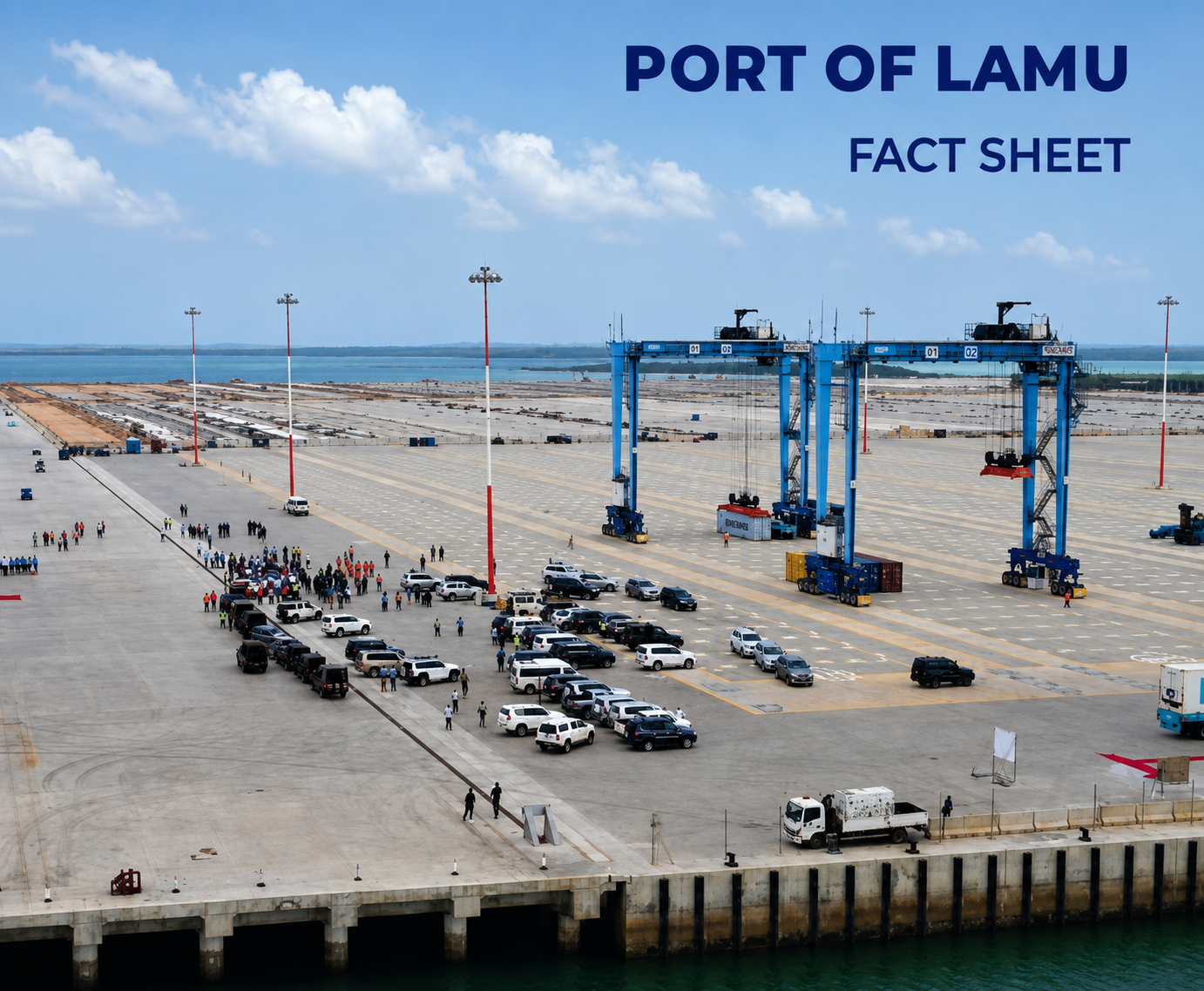
The construction of Lamu port is one of the significant post independent infrastructures in Kenya; the port is located on the northern coastline of Kenya near the historic town of Lamu. The port is one of the LAPSSET Corridor projects aiming to enhance regional trade and connectivity. This emphasis on regional trade underscores the importance of the project. Other LAPSSET infrastructure projects in the pipeline are investments in Highways, Railways, and Airports. Lamu Port is strategically positioned to serve as a gateway to the East African region, connecting Kenya with South Sudan, Ethiopia, and the eastern and northeastern
Transshipment
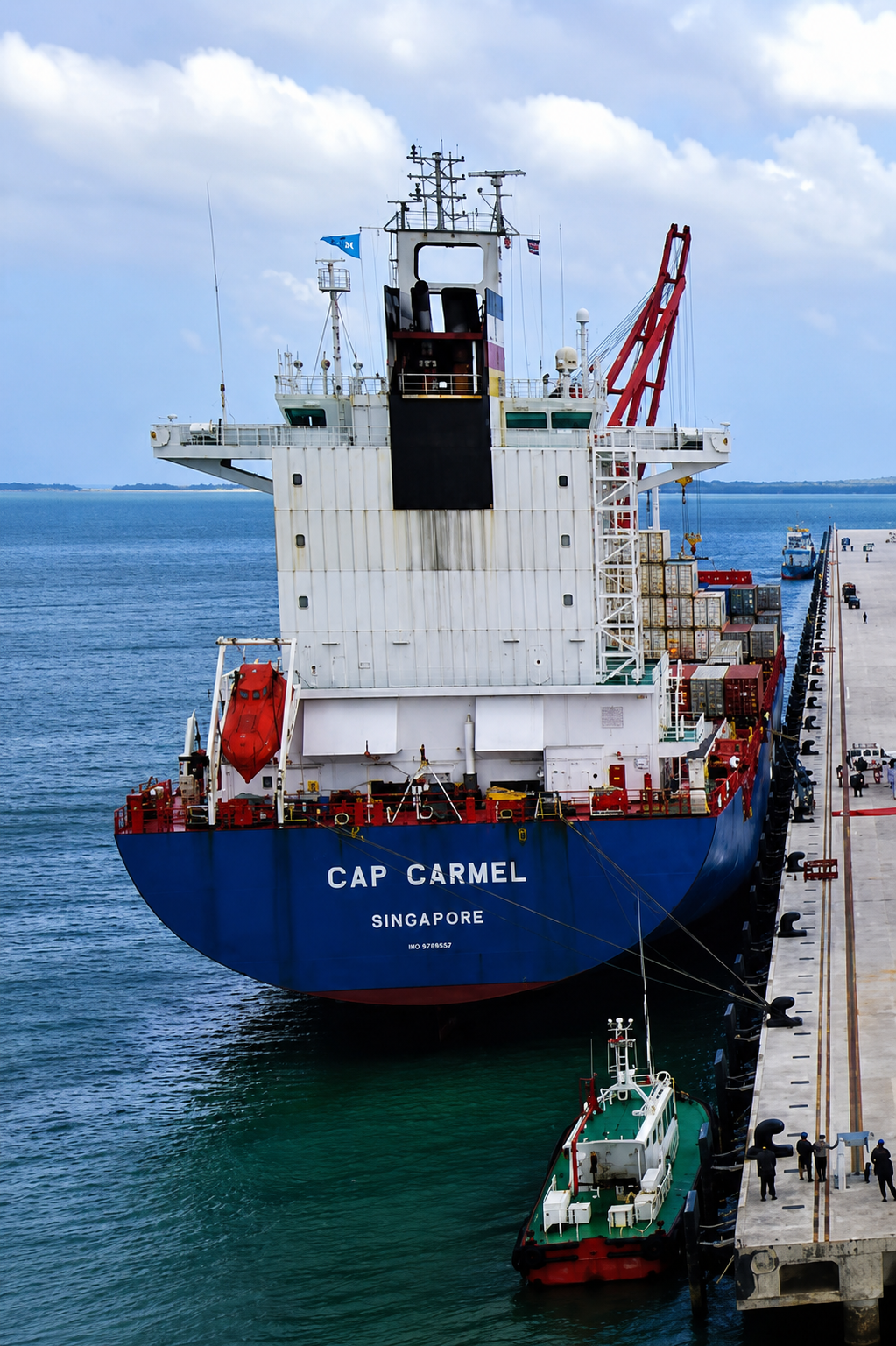
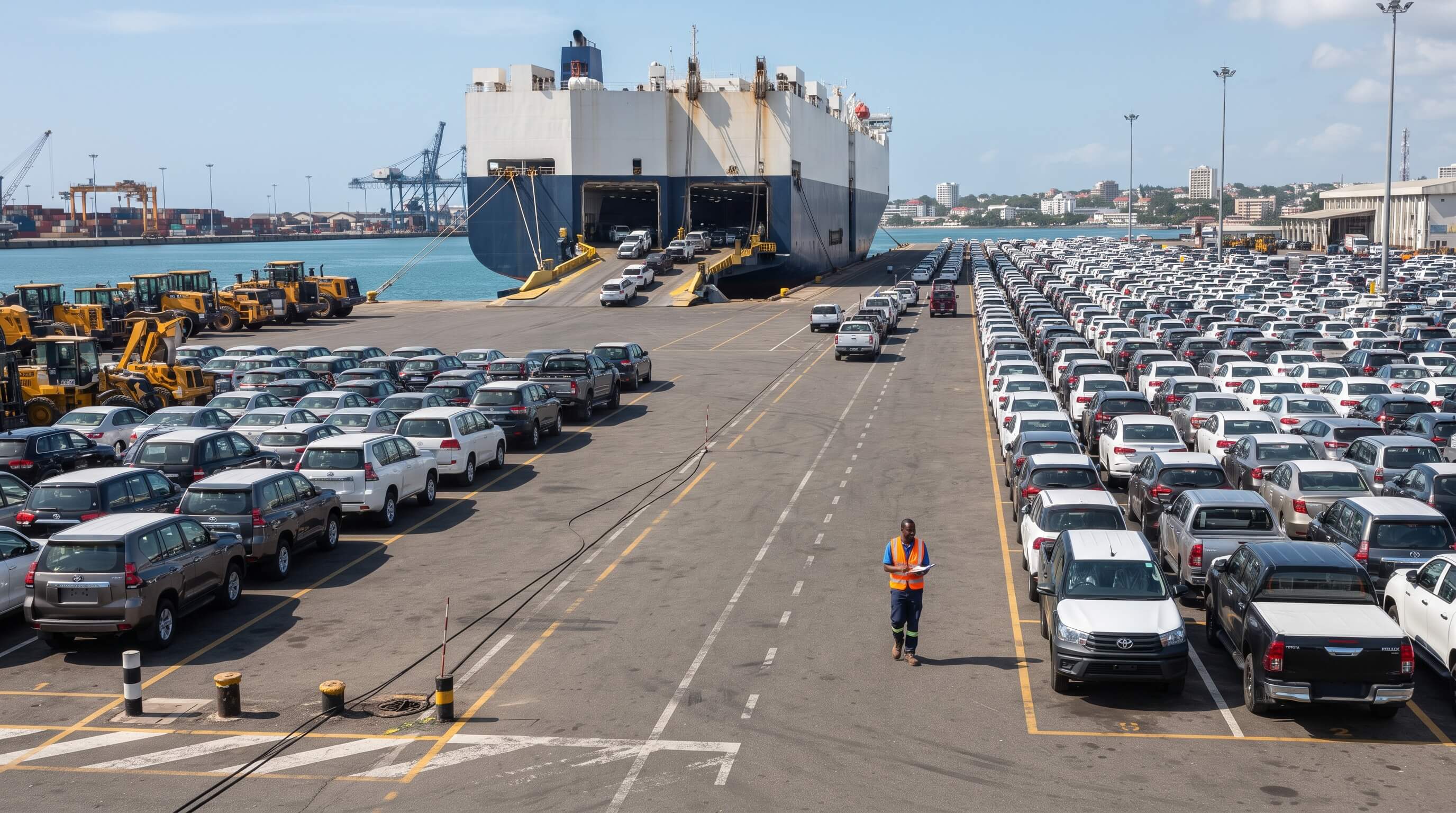
Lamu Port
parts of the country. Its strategic location makes it a key player in the region’s trade and transportation network. Once the project is completed, expectations are high in facilitating smooth trade and transportation of cargo across the region. It will also increase the capacity for cargo handling in Kenyan ports. According to Lapsset, the projects will boost Kenya’s economic growth as a Nation and our neighboring countries. It will reduce transportation costs and improve access to international markets. These will facilitate growth in global trade. On completion, the government expects the port to transform Lamu into a regional trade hub and create employment opportunities for the locals. Once the port is fully operational, it will handle various types of cargo, including bulk cargo, containerized goods, and petroleum products, contributing significantly to Kenya’s growth in the maritime world. Many factors encourage big vessels to sail into a port. The
The Kenya Chamber | 22
most important among them are the vessel’s safety when visiting the harbor, cargo handling equipment, and the depth of the water at the harbor. Lamu was designed to accommodate ships with a draft of up to 18 meters (approx. 59 feet). This depth allows larger vessels to access the port, thus enhancing its capacity to handle international maritime trade effectively. Despite the advantages of the facility, we currently have fewer activities there.
be shipped through Lamu. The government should create more space for container storage facilities, investment technology, and handling equipment and introduce concession rates for vessels and cargo operators. The project’s success largely depends on the dedication and proper systems implemented by the government and the port Authority. Their active involvement is crucial for successfully transforming the port into a transshipment hub, which can be a game changer for maritime trade in this region
The Kenya Chamber | 23
The port could be ideal for Transshipment trade. While other LAPSSET projects are still progressing, the government, through KPA and KRA, should develop attractive policies that will encourage the Transshipment trade in Lamu. This trade can attract transshipment cargo for the Indian Ocean islands of Comoros, Madagascar, Seychelles, Zanzibar & Pembe. Cargo for Somalia, the Northern and Southern coasts of Africa, can also be transshipped from the port. Even cargo destined for Europe could quickly
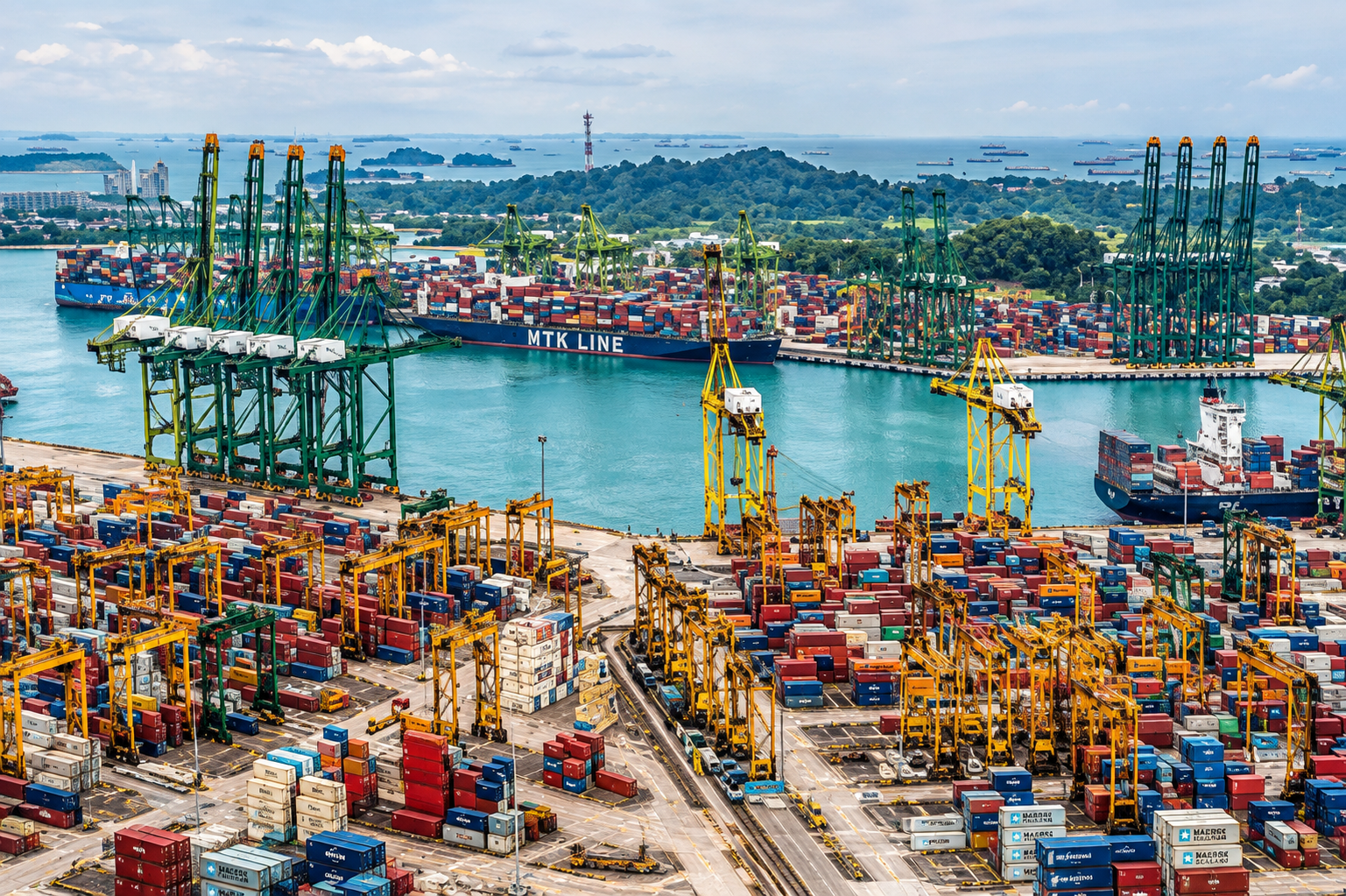
Singapore’s Port is ranked as one of the busiest and most efficient ports globally. It is the second-largest port and the largest transshipment hub globally. It connects to more than 600 ports from 123 countries. The port handles about one-fifth of the world’s container transshipment traffic,
Singapore
making it a vital link for trade and commerce in the region and beyond. In 2023, the port handled over 39.10 million twenty-foot equivalent units (TEUs) of containers, of which transshipment containers comprise a substantial portion of this volume. The same year, Mombasa port handled 2.33 million twenty-foot equivalent units (TEUs) of cargo for imports and exports. The figure for transshipment containers varies in Singapore each year based on global trade patterns and market conditions. As a country, Singapore has a relatively small domestic market with limited land, approximately 750 square kilometers, compared to Lamu, with 130 Km of beach coastline and the land of an area of 6,273 square Kilometers. By providing high-quality transshipment services, Singapore has attracted more cargo and customers from other countries and enhanced its competitiveness and relevance in the global supply chain. All major shipping lines opted to use its transshipment hub due to its strategic location in Asia, as Lamu is on the eastern coast of Africa and part of the Middle East region. The government can use the same strategy for Lamu Port
and processes in the world. It uses automated guided vehicles, quay cranes, and yard cranes to move containers between the yards and berths. When Professor Thomas Sim, a Singaporean logistics consultant and FIATA vice president, did his presentation on the Singapore port in Nairobi during the Global Logistics Conference last year, participants asked many questions about the technology in place in Singapore, which many of us are yet to comprehend. The port leverages intelligent sensors, data analytics, and artificial intelligence to monitor and optimize operations. It also developed a Maritime Single Window system that allows shippers to submit all their documents and declarations online in one platform, just like KPA Kwato’s and KenTrade’s single window, which integrates KPA, KRA, and State agencies in documenting vessel voyages and clearance. It has a high degree of connectivity with other ports around the world. Singapore has signed multilateral agreements with many countries as a port to facilitate smooth trade and transport
The port of Singapore has six (6) terminals and eighty four (84) berths. It has the most advanced technology
Our policy on the transshipment business could be more friendly; the allowable free period for transshipment cargo in the port depends on several factors, including the type of cargo and specific regulations that may apply. KPA
Let us make Lamu a Transshipment Hub.
The Kenya Chambers | 24
The Port of Singapore
Overview of Singapore Port
The Kenya Chambers | 26
The Kenya Chambers | 27
1 / 27 100%